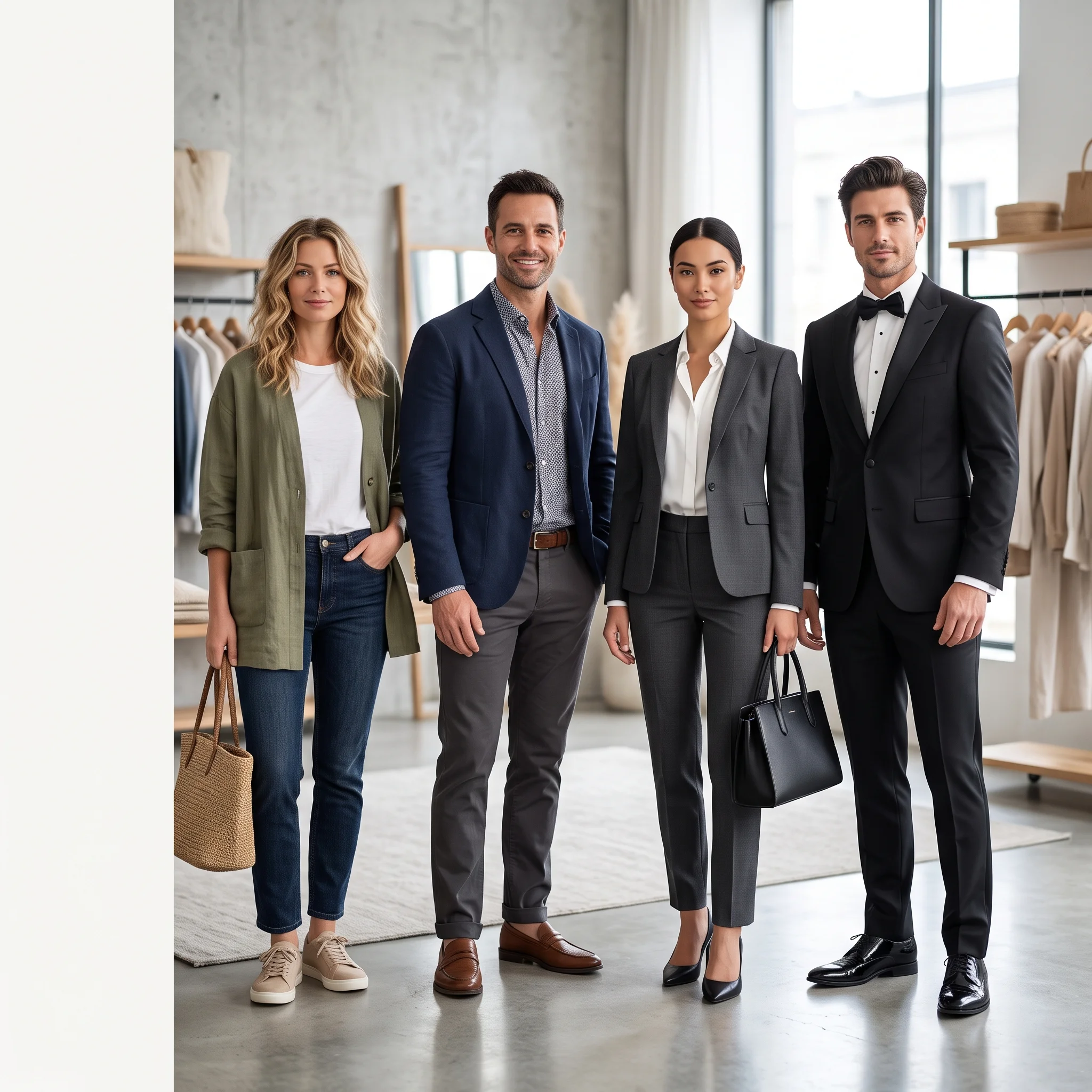
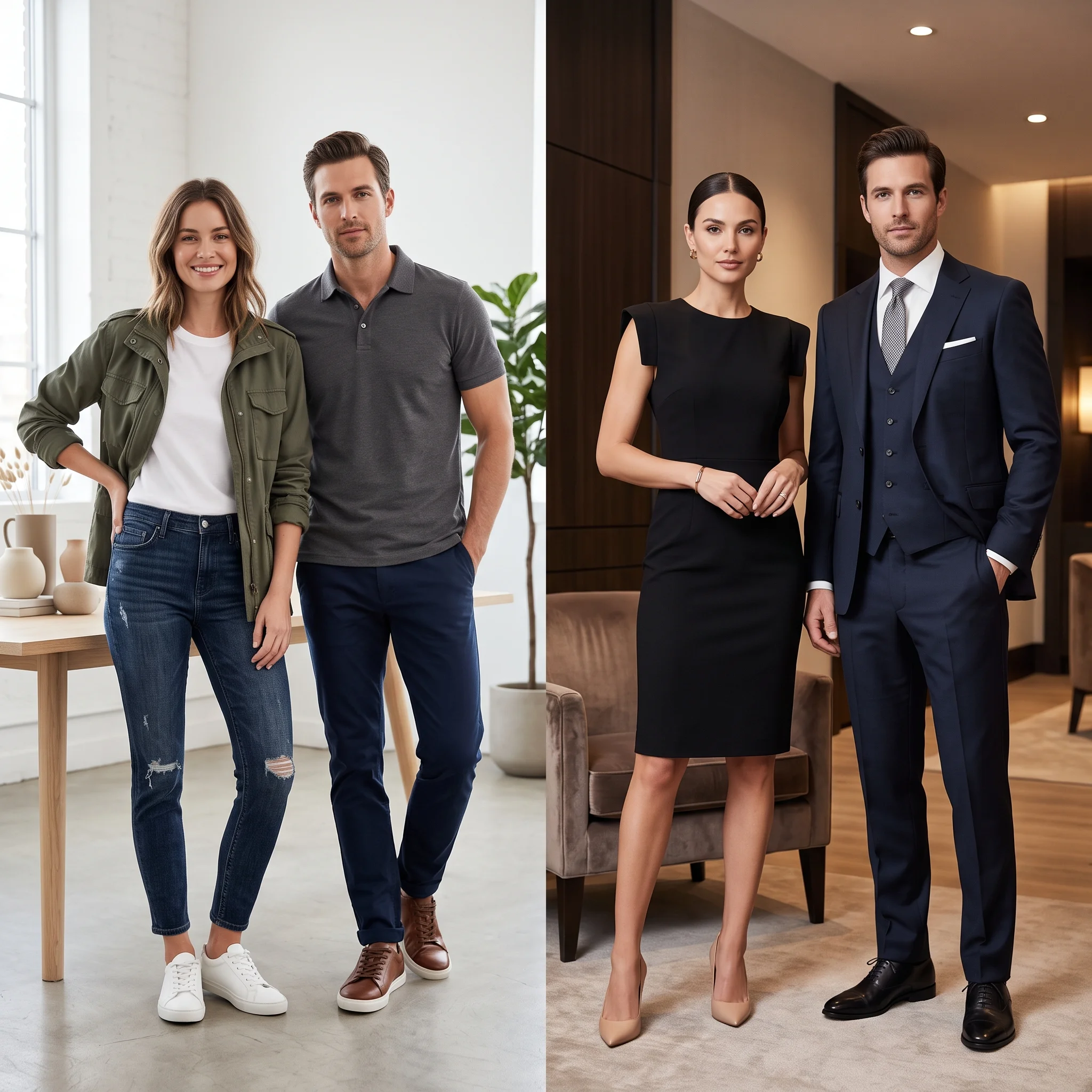
Knowing what to wear for different occasions can make a big difference in how you look and feel. While casual clothing focuses on comfort and relaxed style, formal wear is designed for occasions that require a more polished and sophisticated appearance.
Understanding the difference between casual and formal clothing can help you build a more versatile wardrobe. It also makes choosing an outfit easier when you are getting ready for work, a family gathering, dinner, a wedding, or a casual day out.
What Is Casual Wear?
Casual wear is clothing designed for relaxed, everyday situations. It is generally comfortable, practical, and easy to style.
For women, casual wear can include jeans, T-shirts, casual tops, relaxed trousers, simple dresses, denim jackets, and comfortable footwear.
For men, casual clothing commonly includes T-shirts, polo shirts, jeans, chinos, casual button-down shirts, and lightweight jackets.
Casual does not mean untidy. A simple outfit can still look fashionable when the clothes are clean, well-fitting, and properly coordinated.
When Should You Wear Casual Clothes?
Casual clothing is ideal for activities where formal dressing is not required. You can wear casual outfits for shopping, traveling, meeting friends, family outings, casual lunches, or relaxed weekends.
For example, women can pair jeans with a stylish top and comfortable shoes. Men can combine jeans or chinos with a polo shirt or casual button-down shirt.
The goal is to create a relaxed appearance while still looking presentable.
What Is Formal Wear?
Formal wear is designed for occasions where a more elegant and sophisticated appearance is expected.
For women, formal clothing may include elegant dresses, tailored outfits, formal trousers with a refined blouse, or other polished garments depending on the event.
For men, formalwear can include suits, formal trousers, dress shirts, blazers, and other traditional formal garments.
Formal clothing generally uses more structured designs, refined fabrics, and coordinated accessories than everyday casual clothing.
When Should You Wear Formal Clothes?
Formal wear is appropriate for occasions such as weddings, important business functions, formal dinners, ceremonies, and events with a specific dress code.
Before choosing a formal outfit, always consider the type of event. A wedding may require different clothing from a business meeting, even though both occasions can call for a polished appearance.
If an invitation provides a dress code, follow it carefully.
Smart Casual: The Perfect Middle Ground
Sometimes you do not need to dress completely casually or formally. This is where smart casual clothing becomes useful.
Smart casual combines comfortable pieces with more polished garments.
For women, a smart casual outfit could include tailored trousers with a stylish blouse, a simple dress with elegant accessories, or a neat top paired with well-fitted trousers.
For men, chinos with a button-down shirt, dark jeans with a blazer, or tailored trousers with a polo shirt can create a smart casual appearance.
Smart casual is suitable for dinners, social gatherings, casual business settings, dates, and many events where full formalwear is unnecessary.
The Importance of Fit
Whether you are wearing casual or formal clothing, fit is one of the most important factors.
A basic T-shirt can look stylish when it fits correctly, while an expensive formal outfit can look uncomfortable if it is too tight or too loose.
Casual clothing should allow comfortable movement without appearing excessively oversized unless that is your preferred style.
Formal clothing usually requires more attention to fit. Shirts, trousers, jackets, and dresses should sit comfortably and create a clean overall appearance.
When shopping online, checking the size chart and garment measurements can help you select a better fit.
Choosing the Right Colors
Color coordination is another important part of dressing well.
Casual outfits give you more freedom to experiment with colors, prints, and patterns. You can combine denim with bright tops or use colorful shirts to add personality to a simple outfit.
Formal clothing often looks best with classic and sophisticated colors such as black, navy, grey, white, beige, and other muted shades.
However, formal does not mean boring. A tasteful color accent, patterned shirt, scarf, handbag, tie, or other accessory can add personality while maintaining an elegant appearance.
Accessories Can Change an Outfit
Accessories can help transform a basic outfit into a more complete look.
For women, handbags, watches, jewelry, belts, scarves, and footwear can complement both casual and formal clothing.
For men, watches, belts, shoes, ties, pocket squares, and other subtle accessories can enhance a polished outfit.
The key is balance. Avoid using too many accessories at once, particularly when your clothing already includes bold patterns or colors.
Footwear Matters
Shoes can have a major impact on the overall appearance of an outfit.
Casual outfits can be paired with sneakers, casual loafers, sandals, or other comfortable footwear depending on the season and occasion.
Formal outfits generally require more polished footwear. Women may choose elegant flats or heels, while men may select formal leather shoes or other dress-appropriate footwear.
Always consider the occasion, comfort, and overall color combination when selecting shoes.
How to Build a Versatile Wardrobe
A versatile wardrobe should include a combination of casual, smart casual, and formal clothing.
Start with basic garments that can be combined in different ways. A pair of classic jeans, neutral trousers, basic tops, versatile shirts, and seasonal outerwear can create many casual outfits.
Then add smart casual pieces such as tailored trousers, blouses, polo shirts, button-down shirts, blazers, or elegant dresses.
Finally, keep at least one suitable formal outfit ready for important occasions.
This approach allows you to dress appropriately without needing an enormous wardrobe.
Common Mistakes to Avoid
One common mistake is dressing too casually for an important event. If you are unsure about the dress code, it is usually better to choose a slightly more polished outfit.
Another mistake is focusing too much on trends. Fashion trends can be fun, but clothing should still suit your body, lifestyle, and personal preferences.
Poor fit is another issue to avoid. Clothes that are too tight, too loose, or uncomfortable can affect your appearance and confidence.
Finally, do not forget the importance of clean and well-maintained clothing. Even a simple outfit can look excellent when it is clean, wrinkle-free, and properly styled.
Final Thoughts
Understanding the difference between casual and formal wear makes fashion much easier. Casual clothing offers comfort and flexibility, while formal wear provides a polished appearance for important occasions. Smart casual clothing provides a useful middle ground when you want to look stylish without being overly formal.
The most important thing is to dress appropriately for the occasion while choosing clothing that makes you feel comfortable and confident.
Whether you prefer simple casual outfits or elegant formal styles, a well-planned wardrobe gives you the flexibility to create the right look for almost any occasion.